Fed Update

The FOMC, as expected, did not make any changes to policy, such as raising interest rates from current rock-bottom levels.  However, the tone of the statement was a bit more neutral towards the subject, compared to the accommodative language seen in recent years.

Much of the discussion surrounded whether or not the FOMC would remove the key word ‘patient’ from the official statement.  As was the case a decade ago when Chairman Greenspan did this, the change implies a rate hike could be appropriate at any upcoming time the committee chooses.  Of course, there’s a lot of nuanced semantics here and the Fed remains careful to avoid a misinterpretation or misstep.  April was downplayed as a possible jumping off point for rates, but this entire process as of late has been data-dependent, so could be June or a bit later.  They’ve acknowledged the ‘moderating’ of conditions recently, and weakness in housing, but also the strength in labor growth and potential tailwind from lower oil prices.  (Markets turned around in a positive direction upon hearing the moderating language.)

Looking at the mandate dashboard: Continue reading

Posted in Economic News | Tagged , , , | Leave a comment

Weekly Economic Update

Economic Update 3-16-2015

  • Economic reports of the week were highlighted by retail sales, which disappointed, perhaps with weather effects; consumer and business sentiment was a bit weaker upon a recent trend of higher gasoline prices; and import prices and inflation remained contained.
  • Markets were generally off around the globe. As interest rates fell during the week, bonds generally gained ground in the U.S. with mixed foreign results due to the headwind of a stronger dollar.  Commodities fell back for the same reason, led by oil, which experienced inventory supply concerns.

Continue reading

Posted in Economic News | Tagged , , , | Leave a comment

Chart of the Week: The Forgotten Benefits of Active Management

  Chart of the Week

tech recessioncredit recession

labels for recessions

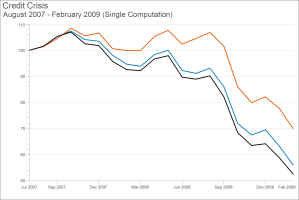
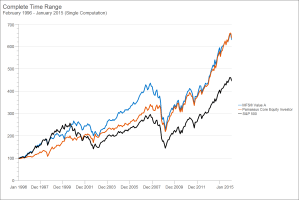
These charts show the movement of the S&P 500 versus a couple of properly screened actively managed mutual funds during two periods of market downturn. With the S&P 500 soaring the past 6 years, it is easy for clients to question the merits of active management.  There is no doubt, nor disputable evidence, that most actively managed funds will underperform their index in strong bull markets and a low interest rate environment. That said, there are still managers that do outperform and with the appropriate screening process, investors can benefit from identifying these top managers and building portfolios. This is especially true during bear markets. A study by Sungarden Investment Research found that in the last two down market cycles, the index only beat 34% and 38% of its active management competitors, even when accounting for survivorship bias.

complete time range

It cannot be stressed enough that investing is not all about what you make, but what you keep. Risk management and downside protection are fundamental in enhancing compound returns, and are nonexistent in passive management. If you are unsure of these qualities in your own investment process, email us at info@lsaportfolios.com, or follow this link to schedule a live webinar http://ow.ly/KfWRr.

Posted in Uncategorized | 1 Comment

Weekly Economic Update

Economic Update 3-09-2015


  • Economic data last week was mixed, as ISM manufacturing and non-manufacturing reports showed expansion, albeit at a lessened rate than expected. Employment data was strong on Friday, in both payrolls and a lower unemployment rate, despite lower participation as a contributing element.
  • Equity markets took a turn for the negative later in the week, as that same stronger employment data heightened fears of sooner Fed rate hike action. Interest rates responded by rising as well, which hurt bond prices.  Commodity prices fell upon a stronger dollar and larger crude oil inventories.

Continue reading

Posted in Economic News | Tagged , , , , , , , , , , , , | Leave a comment

Chart of the Week: Chasing the S&P 500

Chart of the Week: Chasing the S&P 500

LSE_WHATS_NEXT_FOR_EQUITY_MRKTSSource

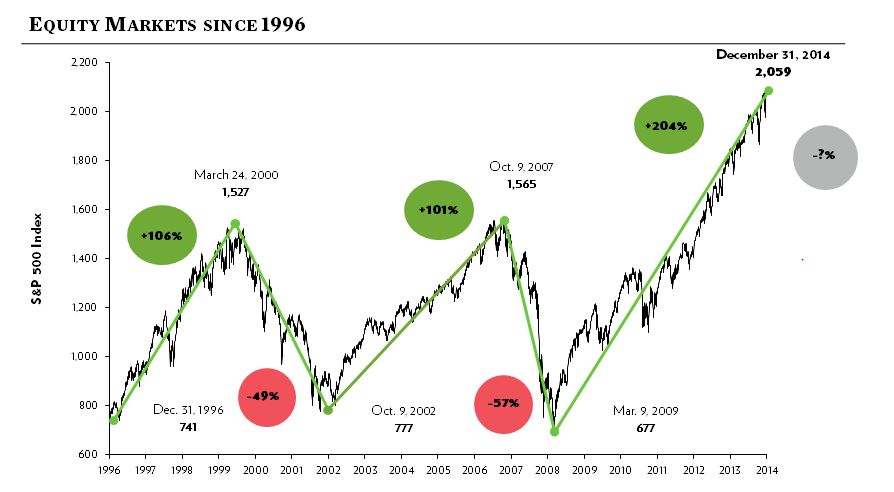
This week’s chart is a visualization of the risk that comes with investing in the S&P 500. Due to its rapid increase since the bottom of the 2008 recession, the popular use of the S&P 500 as a benchmark to track portfolio performance has led to misguided investor expectations of returns for a properly diversified portfolio. With the S&P 500 hitting all-time highs, it has never been more important nor more challenging for investors to understand the significance of downside protection and staying within their own level of risk. Forbes, Market Watch, Investment News, and many others have come out with articles that may be beneficial to share with clients to help them make sense of the current market conditions in relation to a diversified portfolio.

Posted in Economic News, Research | Tagged , , , | Leave a comment

Weekly Economic Update

Economic Update 3-02-2015

  • Economic data was mixed on the week, with housing figures relatively flat on net, inflation coming in weaker on a headline level due to the impact of lower energy prices, and tempered results in other areas. Adjusted GDP results for Q4 of 2014 notched downward a bit, which reflects this slower patch.
  • Equities gained on the week, with foreign stocks outperforming domestic. Bonds generally experienced a positive week upon a retraction in longer-term interest rates.  Although oil prices were mixed to lower, commodity indexes gained upon the heels of higher gasoline prices.

Continue reading

Posted in Economic News | Tagged , , , , , , , , , , | Leave a comment

Chart of the Week: Is this the Biggest Threat to the US Economy?

Dollar

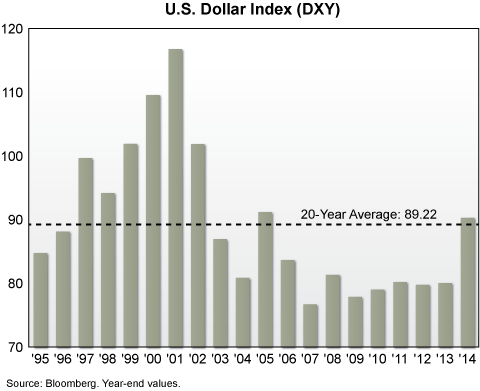
The surge of the US dollar is beginning to be crowned by some as the biggest threat to the economic recovery.  Although the rise is significant, this chart shows that the US Dollar Index is essentially in line with the 20 year average. There is a fear that the worst is yet to come and that when monetary policy begins to tighten, the surge can reach unprecedented levels. However, it is possible that since the rate hike is so highly anticipated to occur sometime this year, it is already priced in to the dollar. For now, the stronger dollar should be seen as a vote of confidence in the US economy, but if it does not slow its current trend it can be harmful to an already sluggish recovery.

Posted in Economic News, Research | Tagged , , , , | Leave a comment

Weekly Economic Update

Economic Update 2-23-2015

  • Economic data on the week was mixed to lower, with several key surveys and housing reports coming in weaker than expected. Perhaps more severe winter weather in recent weeks played a bit of a role, and/or we’re seeing some flattening in growth acceleration.
  • U.S. stocks experienced a less volatile week, with prices ending up slightly above where they started after news of a potential deal between Greece and Europe at the end of the week. Interest rates rose, which was a negative for government bonds across the curve, but credit fared better.  Commodities lost ground again with choppiness in the oil patch.

Continue reading

Posted in Economic News | Tagged , , | Leave a comment

Weekly Economic Update

Economic Update 2-16-2015

  • In a moderately quiet week for economic releases, retail sales disappointed last month on a headline level due to lower gasoline prices. However, price recovery in recent weeks may have weighed on fickle consumer sentiment.
  • Global equity markets gained ground on a variety of geopolitical events (Ukraine, Europe/Greece) resulting in better sentiment. Bonds lost ground on higher interest rates, notably on the longer-end of the curve.  Commodities experienced another positive week with continued stabilization in energy prices.

Continue reading

Posted in Economic News | Tagged , , , , , , , , | Leave a comment

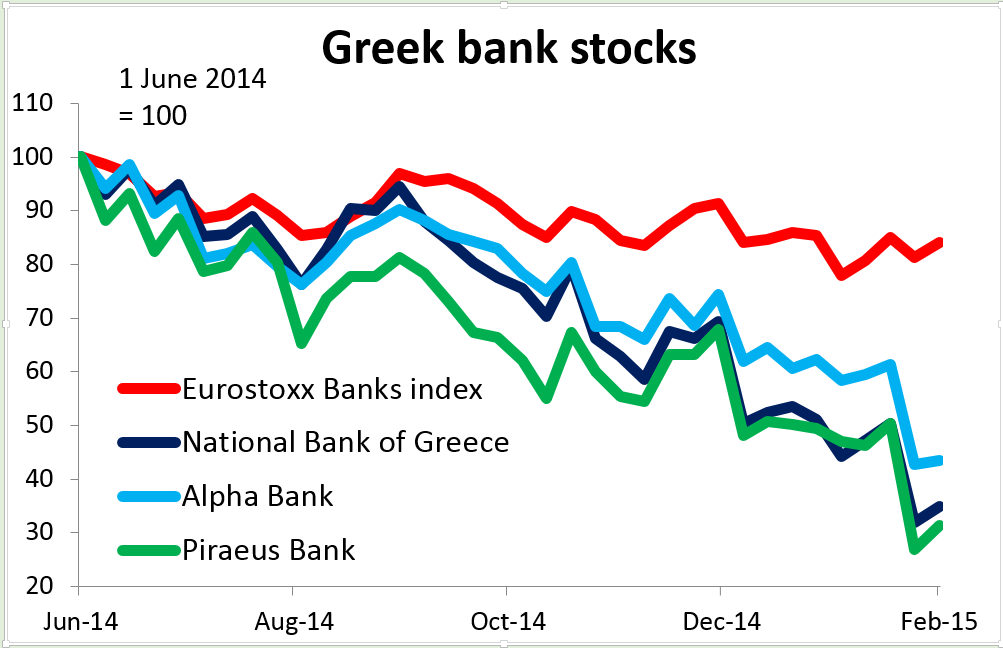
Chart of the Week: Crunch Time for Greece

Chart of the Week: Crunch Time for Greece

Greek Bank Stocks

Source: http://ow.ly/ITA9T

 This past Friday, Eurogroup Chief Jeroen Dijsselbloem shot down Prime Minister Alexis Tsipras’s proposal for a “bridge loan” program that would avoid Greece being shut off from funding at the end of the month, which would have given Greece and Eurogroup officials more time to renegotiate the terms of the bailout program. Under the current bailout agreement, Greece can still receive up to 7 billion euros of aid, but it must comply with further austerity measures of which the new government refuses to implement. The next showdown between the officials is an emergency meeting called this afternoon. Fears of deposit flight are accelerating, as Greek bank stocks have sunk more than 10% this week at the beginning of this week.

Posted in Uncategorized | Tagged , , | Leave a comment

Weekly Economic Update

Economic Update 2-09-2015

  • It was a relatively busy week for several economic reports, including a lackluster but positive ISM number and an employment report that came in better than expected.
  • U.S. equity markets rebounded strongly higher on the week with an easing in geopolitical concerns between the EU and Greece, stabilization in oil prices and end to a less-than-apocalyptic earnings season. Bonds suffered one of their worst weeks in some time with interest rates shooting higher.  Commodities also gained sharply on the back of oil’s gains.

Continue reading

Posted in Economic News | Tagged , , , , | Leave a comment

Chart of the Week: Volatility and the Stock Market

Chart of the Week: Volatility and Stock Returns

Vix to SP returns

This chart shows S&P 500 annual average returns relative tovolatility measured by the VIX Index. Currently, the VIX is hovering around a comfortable reading of 18, just shy of its average reading of 20. The VIX has not shown a monthly average over the 20 mark in over two years (June 2012), no doubt contributing to the attractive returns passive investing boasted during this time period. However, this long stretch of relatively calm activity appears to be coming to end as the VIX has been trending upward the past year. With the uncertainties of oil prices, currencies, geopolitical concerns, and Fed policy flooding the market, it is unlikely this trend will break anytime soon, shaping up 2015 to be a year to emphasize a diversified investing approach.

Posted in Economic News, Research | Tagged , , | Leave a comment