LSA Manager Interview with Ben Keating, CFA – Fixed Income Portfolio Specialist Wellington/Hartford

Picture1

Benjamin Keating, Senior Vice President and Portfolio Specialist, is responsible for communicating Hartford/Wellington Investment Management’s investment strategy and economic outlook to the financial community in the United States. In this capacity, Ben serves as a specialist for our global fixed income offerings and asset allocation models.

With the recent concerns about fixed income in the coming years Ben provides LSA members  strong talking point to communicate with clients and forward looking ideas in fixed income moving forward.

The private LSA manager interview is now available online for active members only.  To view the LSA interview with Ben go to www.LSAportfolios.com and login.  The interview is posted under “Resources/LSA Manager Interview”.  If you are not currently an LSA member but would like to hear the interview contact us at support@lsaportfolios.com.

Posted in Uncategorized | Leave a comment

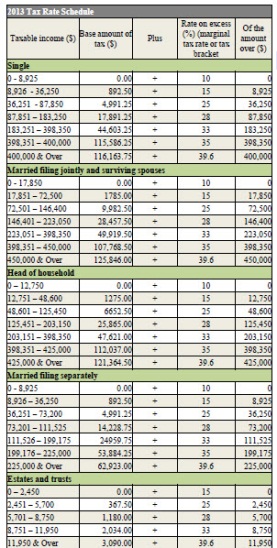
Chart of the Week: Updated 2013 Tax Rate Schedule and Important Financial Data

Updated 2013 Tax Rate Schedule

Every year LSA posts the update tax rate schedule and other important financial data for advisors to use with client and prospects.  The updated document is now available on the LSA website for active member to private label and use in your practice.  If you are not a member but would like to receive a copy of this form contact us at support@lsaportfolios.com .

Posted in Fund News | 1 Comment

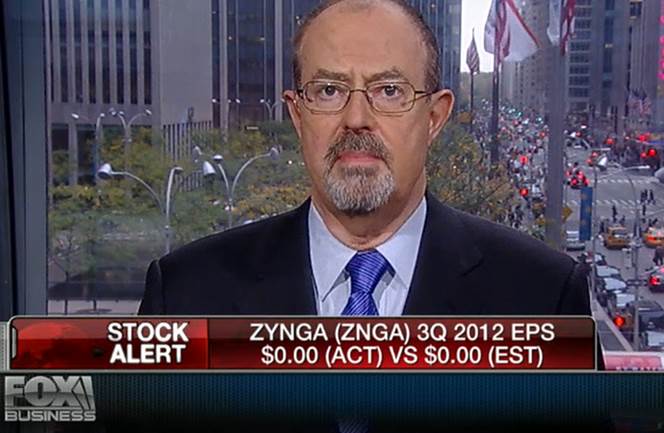
LSA Manager Interview with David C. Wright Managing Director Sierra Investment Management

David Wright

David Wright is a Managing Director of Sierra Investment Management, Inc., a fee-based registered investment advisory firm in Santa Monica, California, founded in 1987 with managed assets in excess of $1.7 billion.

The private LSA manager interview is now available online for active members only.  To view the LSA interview with David go to www.LSAportfolios.com and login.  The interview is posted under “Resources/LSA Manager Interview”.  You do not want to miss out on why David is Bearish on equities in 2013.

If you would like to see David’s latest interviews on Fox Business Closing Bell go to:

http://video.foxbusiness.com/v/1922134016001/what-are-the-buys-in-this-market

Posted in Fund News | Leave a comment

Weekly Economic Update

It was a relatively light week from an economic standpoint.

(+) Non-manufacturing ISM for January was right at par with consensus, at a reading of 55.2 versus an expected 55.0.  The look-ahead components of new orders and current business activity were weaker than in December, but remained in growth mode.  The employment piece rose a bit as well.  Additionally, anecdotal comments from the survey were generally positive, which was a welcome change considering overall business sentiment at year-end.

(-) Factory orders for December were a bit weaker than expected, up +1.8% versus a forecast +2.3%.  Core capital goods were revised down slightly and inventory buildup was weaker than in prior months.

(-) Non-farm productivity in the fourth quarter of 2012 fell by -2.0%, relative to expectations for a -1.4% drop.  This was primarily the result of a lower level of output compared to hours worked, so a change in the numerator changed the ratio.  Hours worked grew at just over a +2% annualized rate, so have normalized to some extent.  Unit labor costs rose by +4.5% (above the expected +3.0%) for the quarter and +1.9% for the full year. Continue reading

Posted in Uncategorized | Leave a comment

Weekly Economic Update

With employment, ISM and GDP all in the news, this was one of the higher-profile reporting weeks in some time.

(0) To set the tone, the Federal Open Market Committee met mid-week and no changes in policy were announced (see last Wednesday’s special note) and the theme remained accommodative, as expected. The statement addressed the continued challenges in the economy—continued high unemployment and last quarter’s negative effects from Hurricane Sandy and uncertainty surrounding the fiscal cliff. However, it also acknowledged the lessened strains in global financial markets and an improvement in the economic outlook in the form of business fixed investment in the U.S. Still, the Fed remains in easing mode and continued the treasury/mortgage bond-buying program and low interest rate policy with a stated goal of 6.5% unemployment up to a limit of forward-looking 2.5% inflation. Now, questions revolve around when an eventual exit strategy will occur from this extraordinary level of stimulus. The ‘stable prices’ mandate may necessitate this before the ‘maximum employment’ mandate will.

(-) The preliminary estimate of real GDP for 4th quarter 2012 was released—the result being negative growth of -0.1%, which was even lower than already-tempered expectations for a +1.1% annualized gain. The two primary factors accounting for the poor early result were government defense spending (which fell at a -22% annualized rate) and inventory investment (both of which, when combined, took -2.6% away from the total nominal number). Of course, concerns about the fiscal cliff sequester certainly played a role in spending and overall sentiment during the quarter. But, there were some bright spots, as personal consumption spending rose at a rate of +2.2% and business fixed investment rose +8.4%. Continue reading

Posted in Economic News | Leave a comment

LSA Weekly Demo Today

Learn how LSA provides portfolio solutions for Independent Financial Advisors, join our “Tee Time” today at 11 AM Central http://ow.ly/hiz0A

Posted in Uncategorized | Leave a comment

FED NOTE

The Federal Open Market Committee concluded their recent set of meetings today, and, as expected, there was no significant change in strategy or communication.  Headlines seemed more focused on Research in Motion’s name change to ‘Blackberry.’ 

The FOMC elected to continue their pace of Treasury/MBS purchases on the order of $85 billion/month for the foreseeable future—this is one program with an open-ended duration tied to overall economic conditions.  Based on this morning’s negative (but preliminary) GDP report, a steady growth trajectory has not solidified quite yet and a slip backward is what the Fed is most worried about at this point.  The Fed referenced critical factors such as the negative disruptions caused by Hurricane Sandy, the moderate (but ‘paused’) pace of economic expansion, including an improved housing market and business/consumer spending, but also continued high unemployment on the negative side.

As we’ve mentioned previously, the Fed believes that a byproduct of some inflation is acceptable versus the alternative of possible further slowing (which is much more difficult to remedy, as is its cousin, deflation, once it starts down that slippery slope).  Interestingly, there are four new voters on the committee in 2013, so the chance of dissenting votes has perhaps increased, as not all Fed Governors are on board with this level and length of easing (there was just one dissent today).  A recent survey of economists was somewhat mixed—with roughly equal numbers thinking the policy is ‘too easy’ and ‘just right’ for conditions.

When looked at from the 30,000-foot level, overall accommodation is slated to continue until their stated objectives are met.  As you may recall, last month the FOMC announced threshold targets of 6.5% unemployment up to an expected 2.5% inflation rate.  We’re still a ways away from that goal, so there is no pressure on the Fed to remove their foot from the gas.  However, from a market perspective, interest rates have moved upward this year, reflecting more optimism in risk assets and hopes for economic improvement in 2013 and 2014.

Sources:  Federal Reserve, Business Insider.

Posted in Uncategorized | Leave a comment

LSA Weekly Economic Update

(-) Existing home sales for December fell by -1.0%, which ran contrary to an expected +1.2% gain, and obviously was a bit of a disappointment.  Single family home sales dropped by -1.4%, which were offset somewhat by condo sales, which gained +1.7%.  From a regional level, weakness in the Midwest (nearly -6%) and South overwhelmed gains in the Northeast and Western portions of the country.  Net-net, a choppy report, but not entirely surprisingly considering the time of year we’re in.

(0) The FHFA home price index, that takes into account prices of homes with Fannie Mae/Freddie Mac mortgages, gained +0.6% for November, which just fell short of consensus by a tenth of a percent.  The Pacific and Mountain regions experienced gains near two percent, and drove the broader upward movement.  The more critical measure, year-over-year price movement, registered a gain of +5.6%, making 2012 the first positive year in six years.

(-) New home sales for December were lower than expected in December, falling -7.3% month-over-month, which ran counter to an expected consensus gain of +2.1%.  Some of this difference was due to some revisions for November (the gain for which was boosted from +4.5% to over +9%), but the volatility is typical of this series and this time of year.  Year-over-year, sales are up +9%, which is positive.

The new home sales story has been a positive one, and may very well contribute meaningfully to U.S. GDP in 2013—inching further towards normal after plodding along at very low levels for years coincident with the financial crisis.  In fact, it could add up to a large percentage of the total GPP number—which, in the slow growth period we’re in, is meaningful.  There are other effects as well, such as indirect demand for household goods and a general improvement in the ‘wealth effect’ that helps consumers feel richer and better able to spend (since their homes are worth more). Continue reading

Posted in Economic News | Leave a comment

FOMC Update

The Federal Open Market Committee has been meeting for the past few days and came to a new conclusion, at least from the angle of how current easing decisions are being made and communicated.  The group is changing its method of fed funds rate guidance from the current ‘calendar-based’ approach (stated goal as mid-2015) to an ‘outcome-based’ method—a change which has been hinted at and endorsed by a variety of economists for several months.  So, it isn’t really a huge surprise.

What does this mean?  In this case, the Fed has tightened up the criteria from a target date several years in the future and, instead, announced various landmarks that specify what needs to happen in order for their foot to be taken off the gas pedal.  These include:  the unemployment rate falling to 6.5%, 1-2 year look-ahead inflation projections being no higher than 2.5%, and long-term inflation expectations remaining ‘well-anchored’ (which leaves a bit of wiggle-room in this definition—with our noting that ‘long-term’ inflation levels have ranged 2.5-3.5% over the decades).  This may not change things all that much, as the unemployment rate target mentioned is still closely aligned with forecasted mid-2015 levels, but this does provide more clarity on the underlying numbers most important to the Fed.

The Fed’s ‘Operation Twist’ (which consists of selling short-dated and buying longer-dated government debt to flatten or ‘twist’ the natural yield curve) expires at the end of December.  However, it doesn’t appear the Fed is ready to cease the bond-buying program just yet, and stated a continuation of these purchases at a rate of $85 billion/month (split roughly equally between Treasuries and MBS), with the possibility of this number changing with time and conditions. 

No other critical changes in the perceived economic environment were communicated, other than a reference to recent weather-related disruptions and mention of eased inflation concerns.

What’s in store for 2013?  Much of this depends on the direction and speed of the economic recovery.  For this reason, it wasn’t out of the realm of possibility to see general targets set as a method to plan an exit strategy from this current stimulative environment as well as continued QE.  Remember, the Fed has operated under a dual mandate since 1977—price stability and maximum employment—unlike many of the world’s central banks that are only focused on the former.  This ties their hands a bit more toward the political angle of the unemployment situation.  Naturally, what can help employment sometimes runs counter to what might be good for monetary policy…this is a difficult balancing act and usually results in the choice of one over another.  For now, the need for more jobs wins.

Posted in Uncategorized | Leave a comment

Portfolio Updates Posted

LSA MEMBERS:  Please make sure you login to the website to review the changes that have been posted.  The latest information is below.

Please find below the portfolios that have been updated and posted to the LSA site.  The line through the platform means that the changes are posted!

 Tuesday November 13th after market close:

  • Allianz
  • Jefferson National
  • Nationwide
  • Protective Life
  • Security Benefit

 Wednesday November 14th  after market close:

  • Private Client
  • Private Client Less than 100K
  • Bear Market Entry
  • Cautious Bear Plus
  • Schwab NTF

 Thursday November 15th after market close:

  • AXA Equitable
  • Hartford Leaders
  • ING Select Advantage
  • Lincoln
  • MetLife
  • Ohio National
  • Pacific Life

We will continue to provide everyone with the most current information…..if you have any questions please contact us at 866-581-5724.

Posted in Uncategorized | Leave a comment

LSA Portfolio Revisions

LSA will be posting revisions to portfolios over the next week starting Tuesday November 13th. Given the recent volatility and pull back since the elections LSA is making a few revisions to the portfolios to protect the gains we have had in 2012 and approach 2013 with a little more caution.  We will start releasing the revisions based on the schedule found below..

Here are the scheduled release dates, please login to the LSA site to view all changes which will post after the market closes on the date shown.

Tuesday November 13th:

  • Allianz
  • Jefferson National
  • Nationwide
  • Protective Life
  • Security Benefit

Wednesday November 14th  after market close:

  • Private Client
  • Private Client Less than 100K
  • Bear Market Entry
  • Cautious Bear Plus
  • Schwab NTF

Thursday November 15th after market close:

  • AXA Equitable
  • Hartford Leaders
  • ING Select Advantage
  • Lincoln
  • MetLife
  • Ohio National
  • Pacific Life

Video commentary will also be posted on Tuesday-Thursday walking through what the revisions look like.

Posted in Uncategorized | Leave a comment

FOMC and QE 3

Today, the Fed Open Market Committee concluded their two-day meeting with some big news—QE 3. Specifically, the FOMC will buy $40 billion of mortgages per month in an effort to spur the recovery in real estate and keep rates for government agency debt low (until the labor market improves ‘substantially’). Additionally, they lengthened and toughened their ‘zero-rate policy’ language from late-2014 to mid-2015. In addition, they stand ready to do more as needed.

This outcome, as has been the case of the last few meetings, was largely expected. However, up until a few days/weeks ago, it wasn’t as clear as to whether such as drastic step would need to be taken. Last week’s poor jobs report and ongoing spottiness in economic data (particularly in manufacturing) appeared to prompt this decision. Continue reading

Posted in Uncategorized | Leave a comment